A zero sugar daily drink stick for kids, built on four ingredients and one unusual decision.
Magnesium bisglycinate, L-theanine, vitamin D3 and vitamin B6, stirred into a glass of water. No sugar, no dyes, no melatonin, no caffeine. It carries a Nutrition Facts panel instead of a Supplement Facts panel, which sounds like a formatting detail and is actually the entire strategy.
sugar alcohols
nothing else
per stick
a day
Everyone built the calm drink for adults.
Mood and calm beverages are the fastest moving thing in the category, up 42 percent in dollars. Walk the set and it is all built for someone with a commute and a mortgage. Adaptogens, nootropics, matte black cans, ashwagandha nobody would give a seven year old.
Meanwhile the parent of a kid who melts down before school has exactly one option, and it is a gummy in the vitamin aisle.
The panel is the product
Every kids calm product on the shelf carries a Supplement Facts panel. That single choice decides where the product lives and who is allowed to buy it.
Supplement Facts
Not SNAP eligible. Routed through the school nurse when a kid brings it from home. Shelved in vitamins, next to things parents already feel uneasy about.
Nutrition Facts
It is a food. SNAP eligible. Goes in the lunchbox like a juice box, and sits with the drinks rather than the pills.
A panel nobody wanted to work inside is the whole reason this exists.
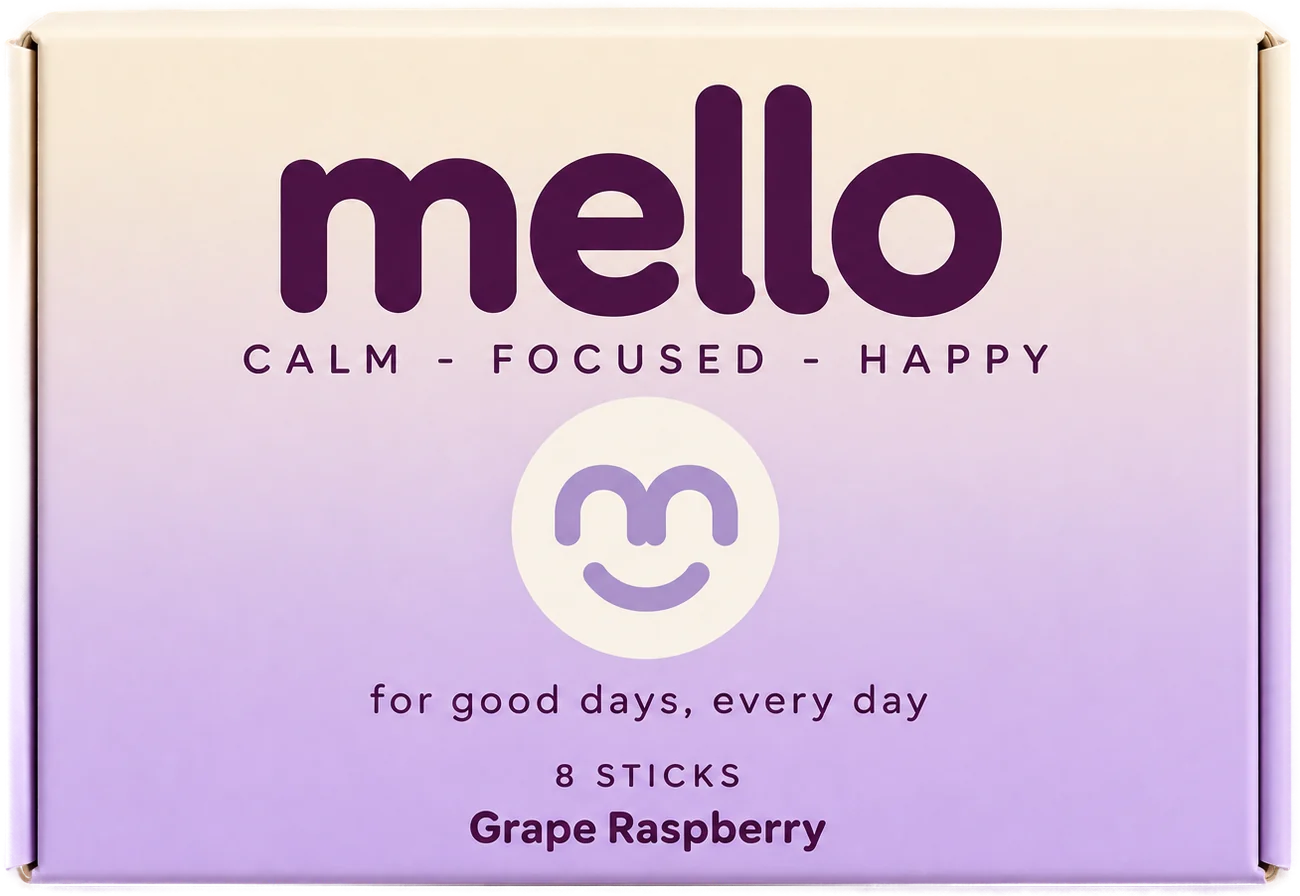
8 count carton
The trial and retail unit. Small enough to sit at eye level in a beverage set, priced to be picked up without a decision.
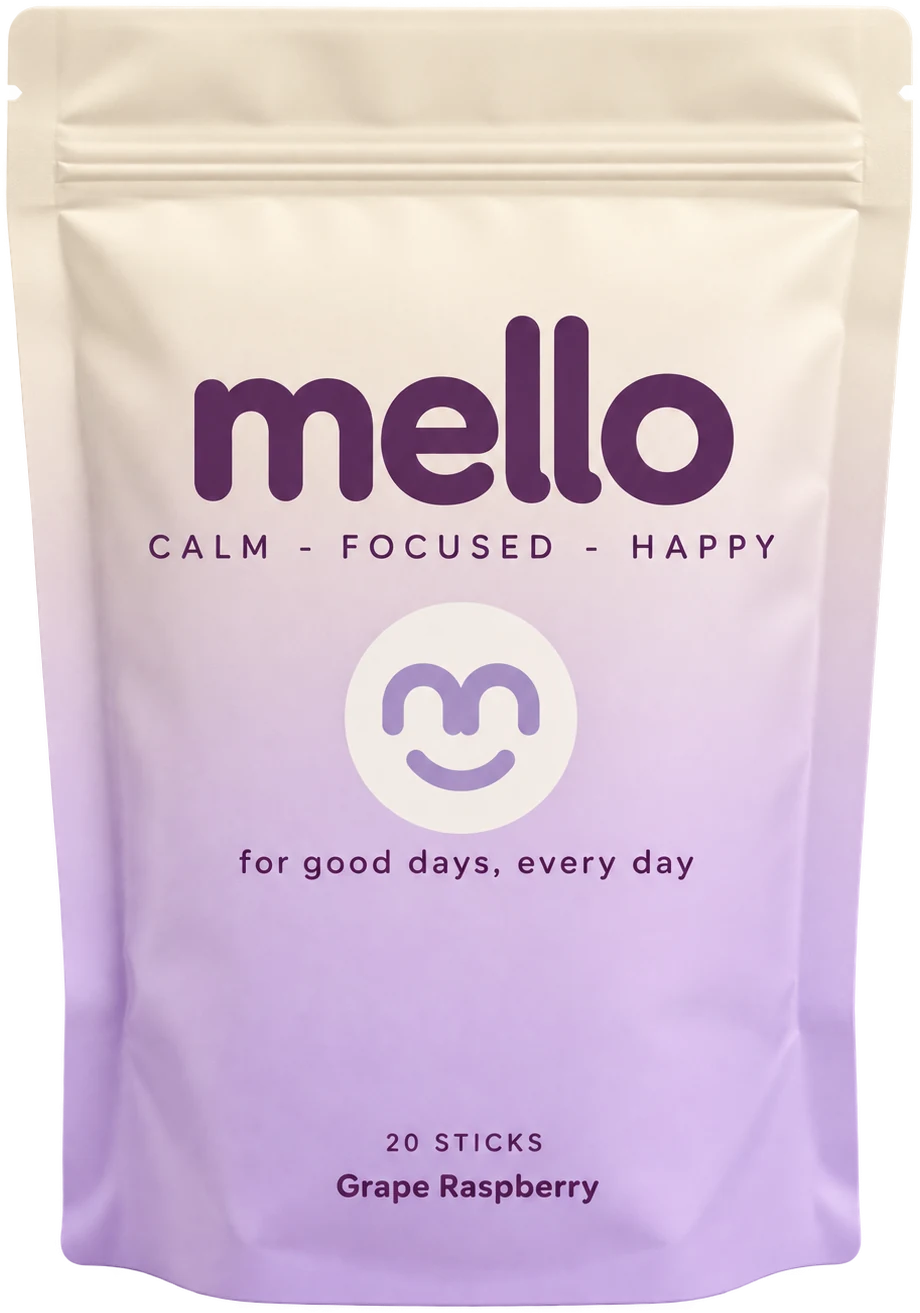
20 count pouch
The subscription unit. A soft touch matte film, a flat bottom gusset, a zipper that survives a pantry.
One stick, 2.4 grams
Small for a stick pack, and deliberately so. Sticks are only fat when they are full of sugar or electrolyte salts. There is no maltodextrin, no bulking agent, no filler. A short ingredient line is worth more than a heavy stick.
Stir into 8 to 12 ounces of cold water. One a day. Ages 5 and up.
The sticks are the same. The kid gets to choose anyway.
Every stick in the box holds identical powder. What changes is the color and the word. The back panel asks how are you feeling today? and the kid picks his stick out of the box.
It costs nothing but print, and it does three things a powder cannot do on its own. It turns a supplement into a thirty second ritual a parent did not have to invent. It carries the calm story with zero regulated claims, because the FDA has no opinion about a color. And it makes the box open into something instead of a brick of identical white sleeves.

The formula got shorter, not longer. Everything that could not defend its place came out.
Magnesium sits inside the NMDA receptor channel as a voltage dependent block, which is the mechanism underneath the whole calm story, and it is a cofactor in hundreds of enzymatic reactions. Bisglycinate is absorbed through amino acid transport rather than competing in the crowded mineral pathways, which is why it is gentler than oxide or citrate. The glycine it is bound to is not a binder, it is the chelate, and glycine is itself an inhibitory neurotransmitter.
Structurally close to glutamate, it crosses the blood brain barrier and raises alpha wave activity, the relaxed but alert band. That is the difference between calm and sedated, and it is why theanine belongs in a morning drink rather than a bedtime one. Pediatric work ran 200 mg twice daily in boys aged 8 to 12 with no safety flags, so a single 100 mg serve is conservative by a wide margin.Lyon 2011, PMID 22214254
This is the part most brands miss. The enzymes that metabolise vitamin D in the liver and kidney appear to require magnesium as a cofactor, so the magnesium in this stick is not only an active in its own right, it is part of what lets the D3 do anything at all. Lichen source rather than lanolin, so the vegan box stays checked.Uwitonze and Razzaque 2018, J Osteopath Med 118(3)
The cofactor that makes the rest of it possible. Glutamate decarboxylase, the enzyme that converts glutamate into GABA, is pyridoxal 5-phosphate dependent, and so is the enzyme that produces serotonin. P5P is the already active form, so it skips the conversion step in the liver. It is the only B vitamin in the product. There is no B complex and there is no vitamin C.
Four ingredients, one loop
B6 is the cofactor the body needs to build GABA and serotonin in the first place. Magnesium works on the receiving end, sitting in the NMDA channel and damping the excitatory side. L-theanine does not change the chemistry so much as the state, shifting brainwave activity toward relaxed and alert. And the magnesium is also what appears to let the vitamin D metabolise.
Which is why it is four and not fourteen
Every one of them is doing something another one needs. Nothing is in there just to look good on a panel, which is usually why an ingredient list runs long.
This is the mechanism, not a promise. It is the answer to why these four and not fourteen. Nothing here is a claim about what mello will do for any one kid.
And what came out
ZincThe ADHD evidence is real but comes mostly from zinc deficient populations. Two milligrams is neither a therapeutic dose nor a marketing asset, and it tastes metallic.
Chamomile and lemon balmShelf theater. On a food panel they add an ingredient line you cannot claim anything about, for no functional benefit.
CalciumIt competes with magnesium for absorption and adds real mass to a stick we wanted to keep small.
Melatonin, caffeine, ashwagandhaA daily drink for a child is not the place for a sleep hormone or a stimulant. Ashwagandha is off the table for children on safety.
Sugar and artificial dyesSweetened with Reb M steviol glycosides, no sugar and no sugar alcohols. Color from purple carrot juice. California's own review concluded synthetic dyes can affect behavior in some children.
Five calories, zero sugar, and one thing the box cannot say.
The single gram of carbohydrate is citric and malic acid counted by difference. It is real, it is unavoidable in anything that tastes like fruit, and it is zero percent of a daily value.
L-theanine cannot appear inside that panel. It is not a nutrient and it has no Daily Value, so the box only holds nutrients. It lives in the ingredient line, plus one factual line elsewhere on the pack that reads 100 mg L-theanine per stick, with no benefit attached. Attach a benefit and it becomes a structure function claim, and the food panel cannot carry one.
Ingredients, Grape RaspberryCitric Acid, Magnesium Bisglycinate, Malic Acid, Organic Natural Flavors, L-Theanine, Purple Carrot Juice (for color), Steviol Glycosides (Reb M), Silicon Dioxide, Vitamin D3 (as Cholecalciferol from Lichen), Vitamin B6 (as Pyridoxal 5'-Phosphate).

Every stick is labeled
Sticks travel. Into backpacks, lunchboxes, a friend's bag. A stick outside its carton with no label is an unlabeled food, so the full mini panel prints on the back of each one.
mello is not in production yet, so none of these seals are on a box today. This is the bar the product is being built to, and the page will say so plainly the moment each one is earned.
The box we cannot check, and why we are fine with it
There is no USDA Organic seal on this product and there never will be. Organic processed foods may only include non-agricultural substances on the National List at 7 CFR 205.605(b). That list allows nutrient vitamins and minerals, and it allows taurine. It does not allow L-theanine, or any amino acid other than taurine.
The only way to earn the seal is to remove the theanine, which turns this into a plain organic magnesium drink and deletes the reason the product exists. So the panel says organic natural flavors, which is true, and the trust budget goes into contaminant testing instead, which is what a parent is actually asking about.
Front of pack, safely
Zero sugar. No artificial dyes. No artificial flavors. No artificial sweeteners. No preservatives. No melatonin. No caffeine. Gluten free. Vegan. Non-GMO.
That stack is worth more on a kids product than any active we could legally put on the back, and every word of it survives a regulatory read.


It is not on a shelf yet.
mello is in production planning. If you want to know when the first boxes ship, leave an email. That is the only thing the list is for, and it is the only thing we will send.
Retailer, buyer or press? Write to nick@mellodrink.com.